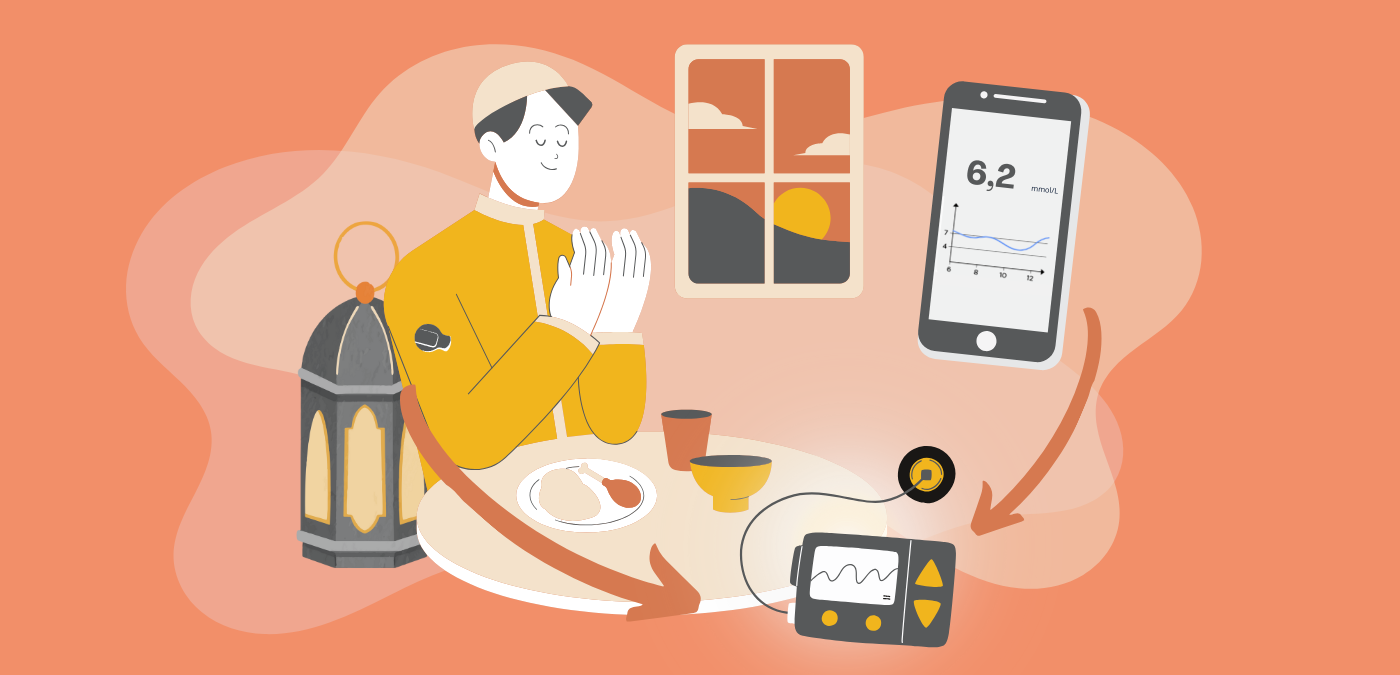
During the muslim holy month of Ramadan, many Muslims around the world fast from sun up to sun down. For Muslims living with type 1 diabetes (T1D), fasting during Ramadan has been associated with greater risk for both hypo and hyperglycemia as well as diabetic ketoacidosis and is generally not recommended by healthcare professionals. People living with T1D, as well as other health conditions, are religiously exempt from this fast. However, for personal, cultural, or spiritual reasons, some Muslims living with T1D may still prefer to fast. In these cases, it’s essential to follow best practices and to break a fast when needed (e.g., hypoglycemic episode). Aside from fasting, lifestyle changes during Ramadan, including shorter sleep, reduced physical activity, and larger or later meals, can also have an impact on blood sugar management, even in those who are not fasting.
Automated insulin delivery systems (AID) also called hybrid closed-loop systems or artificial pancreas, combine a continuous glucose monitor (CGM) with an insulin pump that communicate with each other. The pump uses an algorithm to automatically adjust part of insulin delivery in real time. While AIDs still need manual input of carbs to bolus for meals and some adjustment (e.g, for exercise), they have significantly improved quality of life and time in target glucose range for people of all ages living with T1D. AID systems are now recommended for all people who are willing to use and able to afford them, even young children.
Could AID improve outcomes for those who fast for Ramadan?
A study published in 2024 compared using AID to other treatment options in 294 youth and adults living with T1D attempting to fast during Ramadan. The included treatment options were:
- Automated insulin delivery (AID)
- CGM + insulin pump (without automated insulin delivery)
- CGM + multiple daily injections
- Self-monitoring of capillary blood glucose + multiple daily injections
AID users were of similar age (average 22 years) and sex compared to other groups, but had the highest rates of health insurance. During the study period in the included region of Saudi Arabia, the fasting window ranged from 13 hours and 30 minutes to 14 hours and 20 minutes.
AID users less frequently broke their fast
AID users were less likely to break their fast for diabetes-related reasons, doing so on average 2 days of the month. This was significantly less than the other groups which ranged from 2.5 to 5 days of breaking their fast early (before iftar). There were no recorded events of hospitalization due to T1D or severe hypoglycemia.
AID user had the highest time in range during Ramadan
Among all CGM user groups, those using AID spent the most time in the glucose target range (defined as blood glucose between 3.9 and 10 mmol/L), with 73% of the month in range, compared to about 51-52% for users of CGM + pump or multiple daily injections. This improved time in range was due to less time in both hypo and hyperglycemia in AID users, with the most significant advantage compared to the CGM + MDI group. The AID group had, on average, about half the risk of any extreme blood sugar events compared to the other groups.
More AID users hit both fasting and glycemic targets
Over half of AID users (53%) met the study’s “double target” of staying in the target glucose range for more than 70% of the time while breaking the fast early fewer than two days, compared to 3% in the CGM + pump group, and 44% in the CGM + multiple daily injections group.
Participants who had greater pre-Ramadan glucose time in range, women, and those who were employed, rather than students, were also more likely to achieve the double target outcomes across treatment groups.
What can we learn?
It is important to remember that, while no one experienced a severe hypoglycemia or diabetic ketoacidosis in this study, there remains a significant risk during prolonged fasting. In general, this study indicates that during extended periods of intermittent fasting, AID may be superior to other treatment modalities, providing relevant data for other religious (e.g., Yom Kippur, Lent) or medical fasts.
In this study, they also found that having health insurance was associated with greater ability to fast and improved time in range, reinforcing how social inequalities can influence T1D management.
Want to get involved in research?
If you live with T1D and are looking to participate in research that aims to improve outcomes and advocate for better access, consider joining the BETTER registry today!
Reference:
Al-Sofiani ME, Alharthi S, Albunyan S, Alzaman N, Klonoff DC, Alguwaihes A. A Real-World Prospective Study of the Effectiveness and Safety of Automated Insulin Delivery Compared With Other Modalities of Type 1 Diabetes Treatment During Ramadan Intermittent Fasting. Diabetes Care. 2024 Apr 1;47(4):683-691. doi: 10.2337/dc23-1968. PMID: 38290134.