For someone living with type 1 diabetes (T1D), this diagnosis means lifelong insulin therapy. In recent decades, new insulin types and delivery methods have improved both lifespan and quality of life for people living with T1D. However, counting carbs for meals and adjusting insulin around exercise still carry a significant mental load.
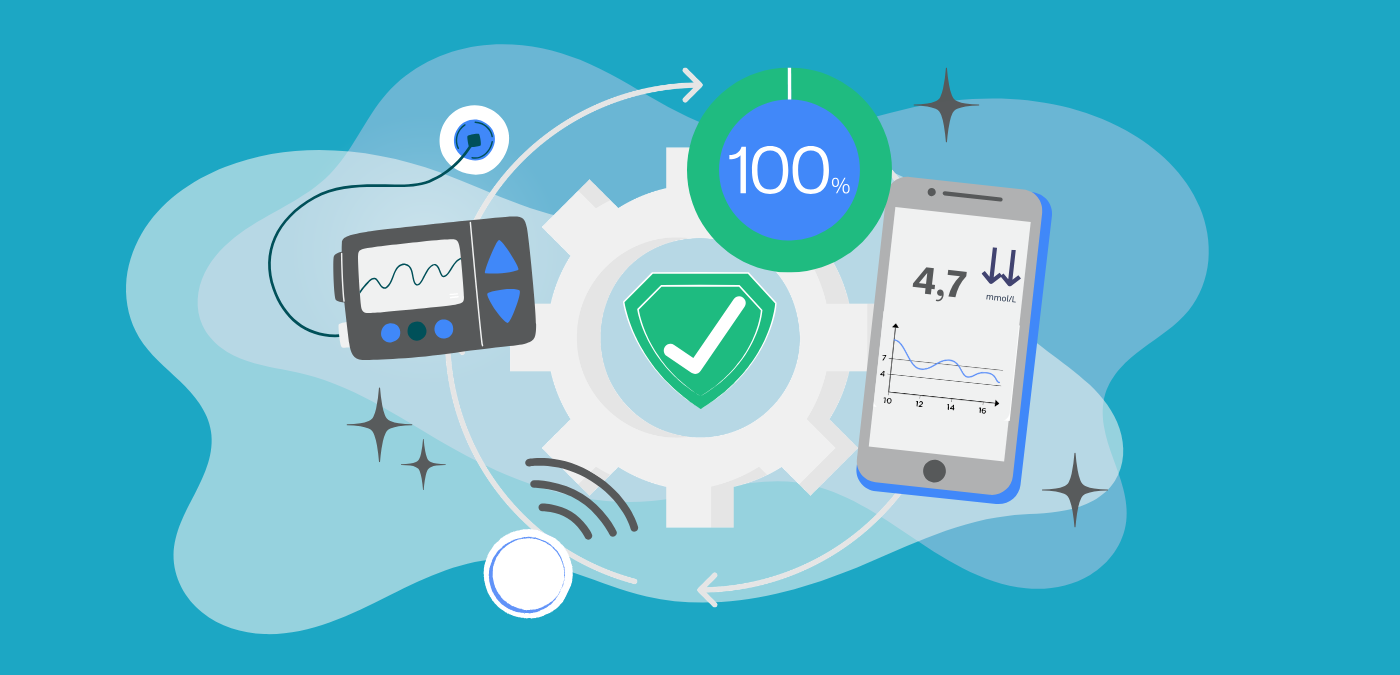
Currently, Canadian guidelines recommend hybrid closed loop systems (also known as artificial pancreas or automated insulin delivery) to all people living with T1D who are willing and able to use them. These systems partially automate insulin delivery using continuous glucose monitor (CGM) data, an insulin pump, and an algorithm. Notably, carbs still need to be counted before meals, and other adjustments are still required at times, including during exercise. In Canada, data from the BETTER registry has also shown that fear of hypoglycemia during exercise with T1D is common, even among people using hybrid closed loop systems, highlighting important room for improvement.
What if insulin delivery could be fully automated?
A small 2025 study tested a fully closed loop insulin delivery system in adolescents and adults (ages 14-60) living with T1D. They compared the fully closed loop system to their usual care, either hybrid closed loop or non-automated CGM and insulin pump. After 5 days of using the fully closed loop in a supervised environment, participants went home and used these systems for one additional week. Importantly, this study included people with a broad range of HbA1c values and ages.
Fully closed loop improved time in range
Using the fully closed loop system lowered average glucose levels by 0.78 mmol/L (14 mg/dL) and improved time in target glucose range by an average of 6% (1.5 hours/day). Participants with higher starting HbA1c (> 8%) saw the biggest improvements with about 13% more time in range (3.25 hours/day). Most improvements were due to less nighttime hyperglycemia.
No more need for manual bolus
The fully closed loop system uses sophisticated models, estimations, and personal history to deliver adequate meal insulin without any prior indication that a meal was coming. During the study, participants required zero manual boluses. Interestingly, the total daily insulin was similar to their usual care.
Moderate hypoglycemia risk remained during exercise
Across 82 exercise sessions during the supervised study period, there were 16 incidents of hypoglycemia (blood glucose < 3.9 mmol/L or 70 mg/dL) that caused an interruption of the workout and required treatment with oral glucose. Blood glucose levels never fell below 3 mmol/L (54 mg/dL) during or post-workout.
The future of insulin delivery
While this study showed promising results for fully automating insulin delivery, there were some technical issues to resolve before widespread use. Participants indicated some benefits of the fully closed loop systems but also reported some decreases in quality of life, control, and flexibility. For some, removing the burden of boluses may be exciting, but many people living with T1D may find handing over a big part of their daily management to be more complicated. New technology always comes with new challenges and understanding how full automation can be improved to avoid these added challenges and give confidence to users will require further study.
Insulin pumps in development that can administer both insulin and glucagon may improve fully automated systems and relieve some remaining hypoglycemia risk, especially during exercise. Also, those using open source, DIY systems (e.g., OpenAPS, CamDiab) have the ability to fully automate insulin delivery and adjust their settings to work optimally for them. At the end of the day, the needs of the T1D community must be met in coming studies in order for these promising results to be truly significant.
Want to get involved in research?
Add your voice to the BETTER registry and help highlight the real-life experiences of people living with T1D in Canada.
Reference:
Moscoso-Vasquez M, Ekhlaspour L, Brown SA, DeBoer MD, Berget C, Cobry EC, Wadwa RP, Capodanno G, Cengiz E, Wong JC, Pryor EC, Villa-Tamayo MF, Fathi AEL, Holmes V, Davis Prince S, Escobar E, Towers L, Hosseininpour Y, Narayan A, Koravi CLK, Nguyen T, Fulkerson D, Barnett CL, Oliveri MC, Breton MD, Forlenza GP; FCL@Home Study Group*. Safety and Feasibility of a Fully Automated Insulin Delivery System: FCL@Home, a Multicenter Randomized Clinical Trial in Individuals With Type 1 Diabetes. Diabetes Care. 2025 Dec 16:dc251526. doi: 10.2337/dc25-1526. Epub ahead of print. PMID: 41401082.