




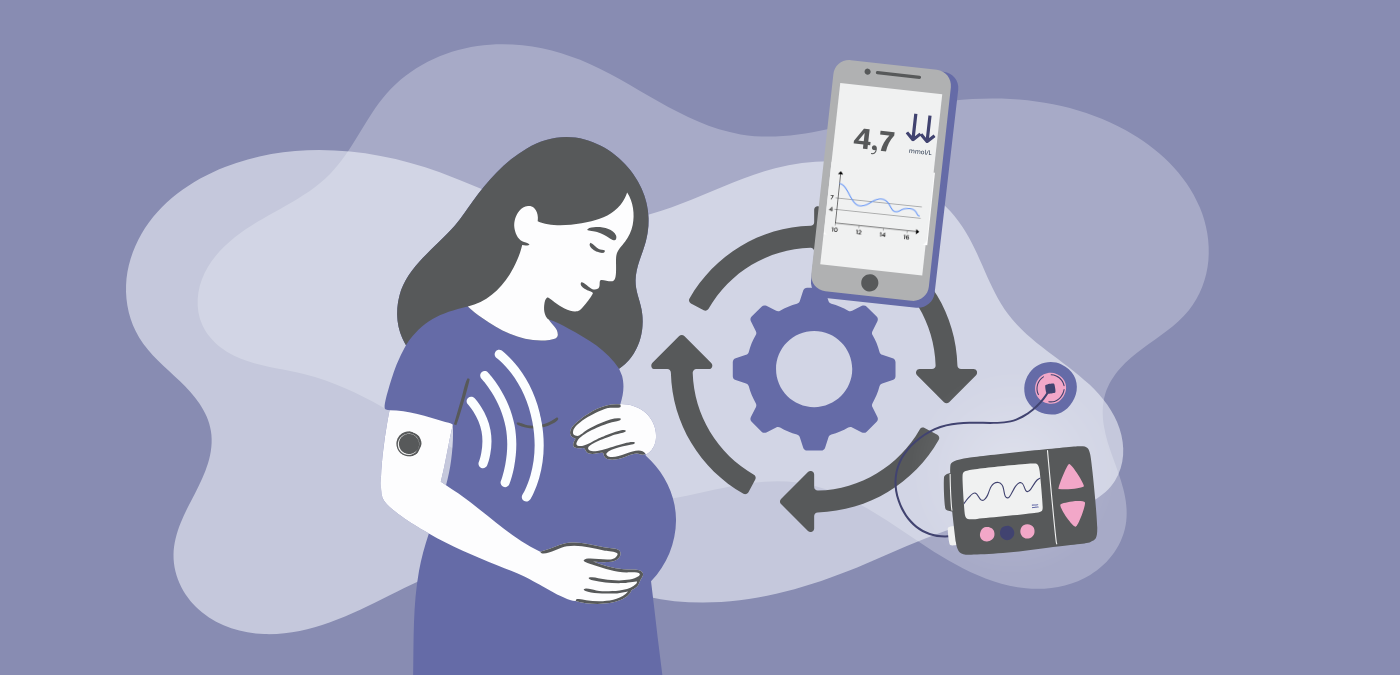
A new continuous glucose monitoring (CGM) option has been available to manufacturers of artificial pancreases since April 2024.
The U.S. Food and Drug Administration (FDA), which is responsible for authorizing the marketing of drugs and pharmaceutical products, has green-lighted the integration of the Eversense E3 implantable blood glucose sensor, transmitter and application into hybrid closed-loop insulin delivery systems (artificial pancreases). For now, this approval is only valid for adults with diabetes in the U.S.
Senseonics Holdings/Ascensia Diabetes Care hasn’t yet submitted any application to Health Canada to market the sensor in our country. So we don’t know if, or when, Eversense will be available in Canada.
What is Eversense?
Eversense is the first CGM with a subcutaneous sensor (that fits under the skin of the upper arm), and it also offers the longest wearing time. It has been available in Europe since 2017 and in the U.S. since 2018, although not as a device that can be used with insulin pumps. The first Eversense model sold in the U.S. could be worn for three months. In 2022, the company obtained approval for the Eversense E3 model, with a 6-month lifespan.
To insert the sensor, a certified healthcare professional makes a small incision in the skin and closes it using Steri-Strips. The incision usually heals within a few days and can be done as part of a regular follow-up appointment.
The company has not reported any problems so far with the insertion or removal of the device, but this very important aspect will have to be closely monitored. Studies have shown that 80% of users choose to have a second device implanted.
The blood glucose data is sent to the Eversense app, available on a cell phone only, by a waterproof transmitter that is installed on the skin using a non-irritant silicone adhesive (which contains an anti-inflammatory drug from the cortisone family to reduce the risk of allergies). One of this transmitter’s special features is that it can be removed to avoid being ripped off, during sporting activities, for instance. However, the sharing of blood glucose data will be interrupted while the transmitter is temporarily removed. The transmitter can also send vibration alerts to the body in the event of hypoglycemia or hyperglycemia, even when the mobile device is not nearby.
Reliability, efficiency, and safety
The FDA has given the Eversense E3 the iCGM designation (integrated continuous glucose monitor) for several reasons:
- Efficiency: More time in range.
- Verified reliability: Accurate blood sugar readings.
- Verified safety: Few or no side effects reported.
- Meets integration criteria for medical devices (including insulin pumps).
The manufacturer and distributor of the Eversense E3 are in discussion with several insulin pump companies to incorporate this device into artificial pancreases, which would provide users with an additional option.
A few features of the Eversense E3
This CGM offers many interesting features. These include:
- To maximize accuracy, the device needs twice daily calibrations with capillary blood glucose for the first 21 days of wear and as needed (e.g., if symptoms don’t match with the displayed result).
- Ideally, the transmitter should be recharged for 10 to 15 minutes every day; it cannot be restarted at the end of its programmed life (6 months). With the size of the transmitter very similar to that of CGMs, some people and healthcare professionals question the benefit of an implanted option.
- Once inserted, the system requires a 24-hour warm-up period before starting to measure blood glucose.
- The subcutaneous sensor is compatible with most magnetic resonance imaging (MRI) scanners. However, the transmitter must be removed.
- Eversense causes less compression hypoglycemia, which also means fewer false alarms during the night. When you sleep on a CGM sensor, the weight of your body constricts it, which can produce false readings.
- There is some data for children and youth with diabetes under 18 years of age, an age group that might appreciate this type of device. As of now, the device is authorized for adults only in the United States.
What does the future look like for the Eversense E3?
A few elements could limit access to this device:
- Device and installation costs. In the U.S., Senseonics Holdings/Ascensia Diabetes Care offers financial support under certain conditions.
- Coverage by insurers or public health systems. In the U.S., the device is covered by Medicare and several private insurers.
- Required training for healthcare professionals.
- Problems caused by faulty sensors.
- Dealing with potential hospitalizations or security checks, at the airport, for instance.
There’s no denying it, technologies are constantly improving and adapting to offer a range of options for people with T1D (e.g., 2-in-1 sensor to measure blood glucose and ketones). In fact, a new Eversense E3 that can be used for one year is currently being evaluated! Let’s hope that this system will one day make its way to our side of the border, assuming that you agree, of course, to wear a “bionic implant”!
References:
- Ascensia Diabetes Care. Eversense. Page consulted on May 22, 2024. [in French]. Présentation du système CGM Eversense® E3 | Ascensia Diabetes Care (ascensia-diabetes.ch)
- Aronson, R. et al. (2019). First assessment of the performance of an implantable continuous glucose monitoring system through 180 days in a primarily adolescent population with type 1 diabetes. Diabetes Obes. Metab. 21(7): 1689-1694. https://pubmed.ncbi.nlm.nih.gov/30938036/
- Tucker, M. E. (2024). FDA Allows Implantable CGM to Integrate With Insulin Pumps. Medscape Medical News. https://www.medscape.com/viewarticle/fda-allows-implantable-cgm-integrate-insulin-pumps-2024a10008fn?form=fpf
- Renard, E. et al. (2022). Reduction of clinically important low glucose excursions with a long-term implantable continuous glucose monitoring system in adults with type 1 diabetes prone to hypoglycemia: the France Adoption Randomized Clinical Trial. Diabetes Obes. Metab. 24(5): 859-867. https://pubmed.ncbi.nlm.nih.gov/34984786/#full-view-affiliation-1
- Garg, S. K. et al. (2022). Evaluation of Accuracy and Safety of the Next-Generation Up to 180-Day Long-Term Implantable Eversense Continuous Glucose Monitoring System: The PROMISE Study. Diabetes Technology & Therapeutics 24(2): 84-92. https://pubmed.ncbi.nlm.nih.gov/34515521/
- Jacobs, F. et al. (2022). Bonne nouvelle pour les diabétiques : feu vert pour un capteur implantable qui dure 6 mois. Smarthealth. Page consulted on May 27, 2024. [in French] https://smarthealth.live/fr/2022/02/18/bonne-nouvelle-pour-les-diabetiques-feu-vert-pour-un-capteur-implantable-qui-dure-6-mois/
- Rohner, D. G. et al. (2024). Impact on diabetes control and patient-reported outcomes of a newer implantable continuous glucose monitoring system (Eversense® CGM System): a single-centre retro- and prospective observational study. Swiss Med Wkly. 154: 3366. https://pubmed.ncbi.nlm.nih.gov/38579290/
- Irace, C. et al. (2020). Clinical use of a 180-day implantable glucose sensor improves glycated haemoglobin and time in range in patients with type 1 diabetes. Diabetes Obes Metab. 22(7): 1056-1057. https://pubmed.ncbi.nlm.nih.gov/32037699/
- Jee Hee Yoo and Jae Hyeon Ki. (2023). Advances in Continuous Glucose Monitoring and Integrated Devices for Management of Diabetes with Insulin-Based Therapy: Improvement in Glycemic Control. Diabetes Metab J. 47(1): 27–41. 10.4093/dmj.2022.0271
- Mike Hoskins. (2022). FDA Approves Eversense 6-Month Implantable Glucose Sensor: What People with Diabetes Need to Know. Healthline. Page consulted on June 19, 2024. https://www.healthline.com/diabetesmine/eversense-e3-six-month-implantable-sensor

Written by: Nathalie Kinnard, scientific writer and research assistant
Reviewed by:
- Rémi Rabasa-Lhoret, M.D., Ph.D.
- Sarah Haag, R.N., B.Sc.
- Anne-Sophie Brazeau, P.Dt., Ph.D.
- Marie-Christine Payette, Claude Laforest, Aude Bandini and Michel Dostie, patient partners of the BETTER project.


Sign up for our newsletter
Subscribe to stay informed about type 1 diabetes.
Upcoming Event
Participate in the BETTER registry!

First registry of people living with T1D in Canada.
Learn More