When diabetes meets art

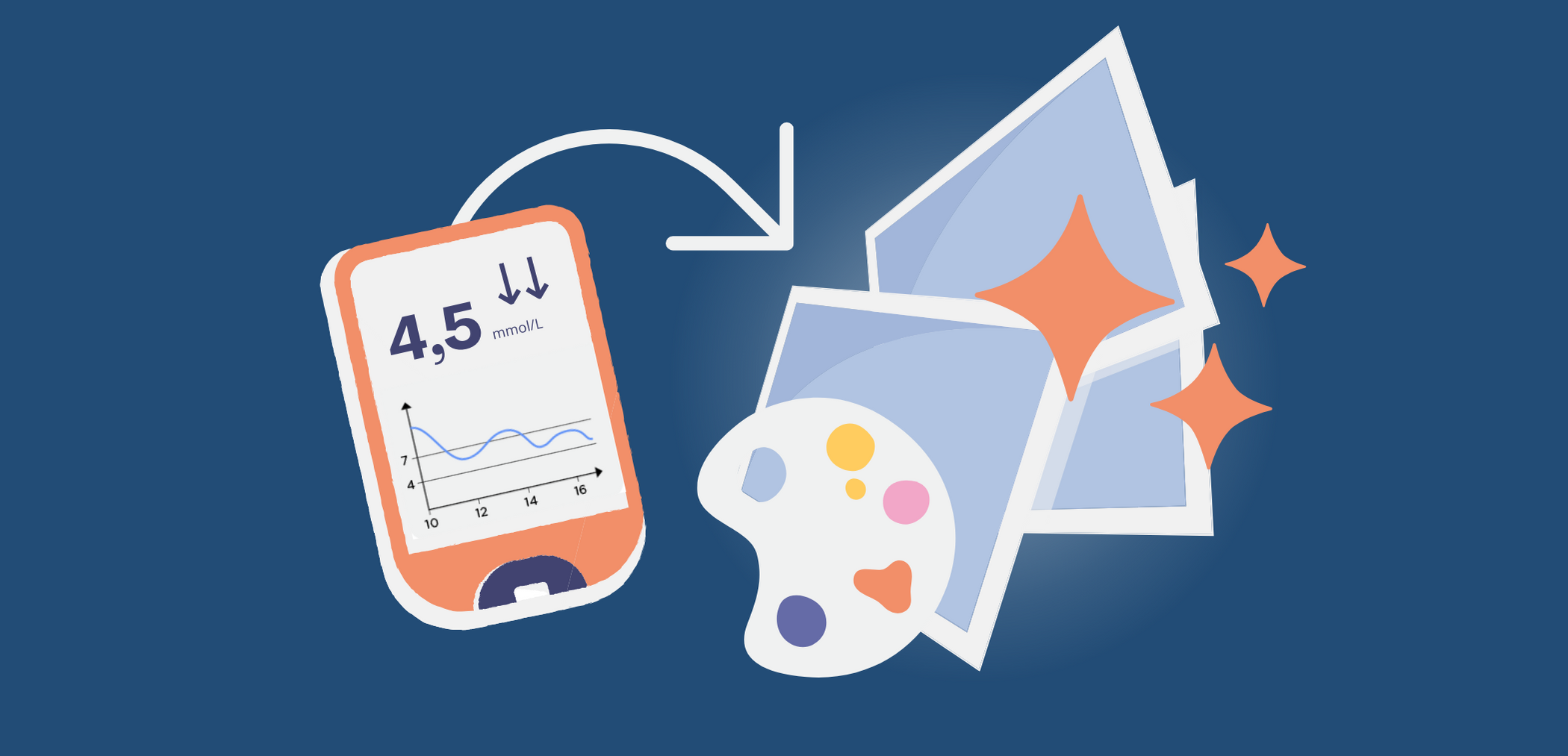
People living with type 1 diabetes (T1D) juggle numbers daily: blood sugar levels, units of insulin, grams of carbohydrates, minutes of exercise, costs of prescription drugs, etc. Numbers are at the heart of how T1D is managed. And this 24/7, 365-day-a-year number-crunching can weigh heavy on their shoulders and can lead to diabetes burn-out. But these same numbers can also be used to create art. Harnessing diabetic data for creative purposes can open up space for other ways of thinking about diabetes. 

Did you know you can see, hear, and feel your blood sugar data? That’s been the mission of one of the BETTER registry participants lately. As a person living with T1D, Samuel Thulin, is an artist and a researcher; he has his heart set on viewing diabetes data through an artistic eye. We invited him to be a guest blogger to talk about his projects.

From medical data to art data

Samuel explains:  For most of my life, since being diagnosed with T1D as a teenager, I viewed my illness as a weakness and a burden. I became skilled at reading my numbers, estimating the carbs in any food, and understanding how exercise would affect me. But I didn’t give T1D numbers any more thought than that. They were part of my treatment, that was all. In 2018, things changed when I began experimenting with how my diabetic data could be used to create art. 

This idea first came to me when I was conducting research and co-curating a Deaf and disability media arts exhibition, which inspired me to think of how art could challenge common ways of thinking about diabetes.  At the same time, I also collaborated on a project for which I developed a musical score using the heart-rate data collected by an older choreographer wearing a Fitbit watch. This inspired me to think about how my own data–the diabetic data I collect on a daily basis–could be used to create art.

Exploring art works

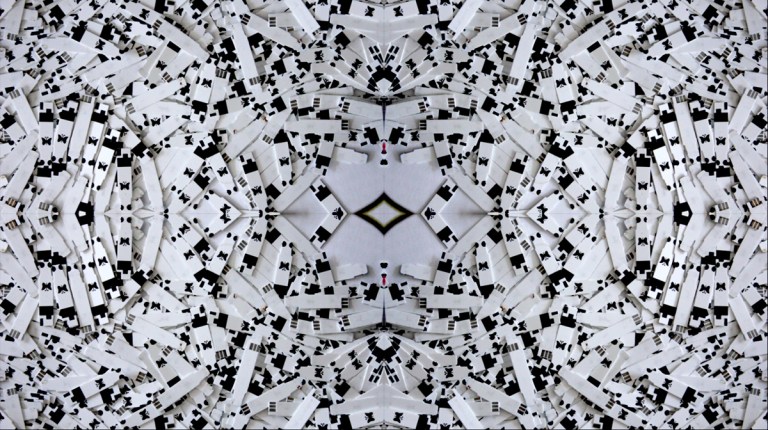
My first work with diabetic data was a gallery installation called Hemo-resonance #1 (2018) which explored the notion of feeling your data. It transformed my blood sugar levels and insulin injection amounts gathered over 100 days into a 10-minute video and “vibrational” experience. I converted the numbers into low-frequency sounds and I fed those sounds to a makeshift table where the old test strips I had used to collect the data were laid out. The test strips moved around on the table in response to the vibrations (which is what you see in the video). Meanwhile, vibrotactile cushions were available for people to touch so that they could also feel the data as vibrations while they were watching the video. I was interested in the idea that this data gets pulled from our bodies but also can have different sensory impacts on our bodies. 

Still from the video for Hemo-resonance #1

Sensing Sugar 

After Hemo-resonance #1, I created other works that explored sensorial and creative ways of using my diabetic data, such as the online work Hemo-resonance #2 (2020) and the immersive experience Sweet Immersion (2022). However I found myself increasingly wanting to make it possible for other individuals living with T1D to also experience their data as artwork. Sensing Sugar (2023) is my first project attempting to do this. 

Sensing Sugar is an online project where anyone who tracks their blood sugar levels can see and hear their data as music and visuals. One part of the website (‘Sensing Your Sugar’) allows for a private experience where you can see and hear your data without it ever leaving your computer. Another part (the ‘Sugar Gallery’) shows the audiovisual data results from people who volunteered to have their data included in the project.

Still of visuals created from blood sugar data in Sensing Sugar

People living with T1D who have visited the site have especially appreciated the “Sensing Your Sugar” feature, where they can experience their diabetic data in a new way outside of the medical frame that usually dominates our relationship with our condition. Instead of the data showing variations in your personal diabetic management–which are often experienced as successes and failures– it produces music and visuals for aesthetic enjoyment. One visitor to the website exclaimed, “I never thought I’d be able to conceive of my blood sugar levels as worthy of a Mutek show”, referring to the renowned electronic music festival held in Montreal (translated quote). 

Ultimately, my goal in making art with diabetic data is to try and imagine different ways of relating to diabetes and the technologies that surround it. I hope to open up a space for reflection where, if only momentarily, the numbers of diabetes are not experienced in terms of their utility, but as the source of an artistic creation. 

Many individuals living with T1D create works of art with diabetes data and/or materials/waste products (e.g., CGM data reports, old insulin vials, test strips) to express their feelings about T1D, raise awareness about T1D, or learn to live better with their condition (art-therapy). Are you one of them? Let us know what you do and why you are doing it!

References:

  • Bennett, J. A. (2019). Managing Diabetes: The Cultural Politics of Disease. NYU Press.
  • Frazer, B. C., & Walker, H. R. (Eds.). (2021). (Un)doing Diabetes: Representation, Disability, Culture. Springer International Publishing. https://doi.org/10.1007/978-3-030-83110-3
  • Thulin, S. (2021). Diabetes, Art, and Data Resonance. Canadian Journal of Disability Studies, 10(2), 162–185. https://doi.org/10.15353/cjds.v10i2.795

Written by: Samuel Thulin, administrative coordinator and research associate, Concordia University

Reviewed by:

  • Rémi Rabasa-Lhoret, M.D., Ph.D.
  • Sarah Haag, R.N., B.Sc.
  • Anne-Sophie Brazeau, P.Dt., Ph.D.
  • Nathalie Kinnard, scientific writer and research assistant
  • Krystal Akanni, Ayush Chadha, Kaitlin McBride, Darrin Davis and Barbara Kelly, patient partners of the BETTER project.

Linguisitic revision by: Barbara Kelly

Upcoming Event

Discover more from BETTER

Subscribe now to keep reading and get access to the full archive.

Continue reading