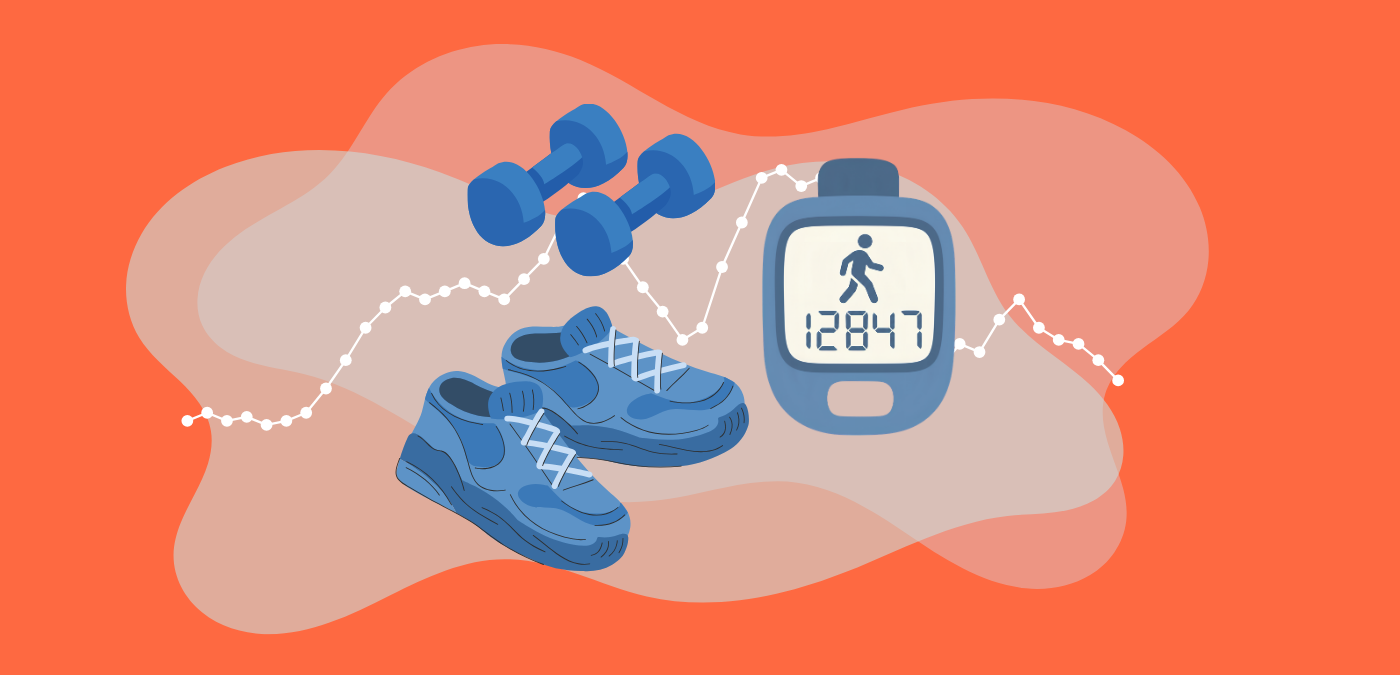
Exercise can have huge benefits for both mental and physical health, but juggling blood sugar management and avoiding both highs and lows can be an obstacle to physical activity. While exercise is a recommended method to lower moderately high blood sugar when you live with type 1 diabetes (T1D), intensity and exercise type can have an impact on those fluctuations.
Exercise in the age of T1D technology
Diabetes technology exists to simplify blood sugar management, but it is imperfect and requires significant user understanding and oversight. Continuous glucose monitors (CGM) are now extremely common and a quite accurate way to measure blood sugar. Insulin pumps and automated insulin delivery systems (aka, artificial pancreas) can partially automate insulin administration and even include activity settings. However, data from the BETTER registry show that using new diabetes technology does not remove barriers to exercise.
Outside the context of diabetes, devices and apps for tracking fitness and health metrics are becoming much more popular. Linking your workout information and blood sugar values could provide a lot of insight into your own responses to exercise – have you tried it?
Exercise tracking and CGM: how do different exercises compare?
A new study looked at blood sugar levels during 428 058 workout sessions of 3248 people living with T1D to better understand the average responses to different types of physical activity. The data was collected over 10 years in 68 countries using exercises logged into a tracking app (MySugr, Apple Health) and CGM values. Workouts were classified as walking, aerobic activity (aka cardio; e.g., cycling, running, hiking, climbing), or anaerobic activity (aka strength training e.g., weightlifting, gymnastics, core training).
Cardio exercise quickly lowers blood sugar
Sessions had to be at least 15 minutes long to be included. The average activity duration was 45 minutes. Strength training activities and cycling typically lasted longer than walking and running sessions. From the beginning to the end of the exercise, blood sugar levels went down regardless of exercise type, though the decreases were greater with cardio and walking (1.2 mmol/L on average) than strength training (0.6 mmol/L on average).
Exercise poses some hypoglycemia risk
The risk of hypoglycemic events (15 minutes or longer below 3.9 mmol/L) was also higher after exercise. Cardio exercise increased the overall 24 hour post exercise risk of hypoglycemic events, but both cardio and strength training activities had a heightened risk of hypoglycemia overnight.
All exercise types improve time in range
However, physical activity is not all about hypoglycemia. Compared to the 24 hours after a sedentary day, all three exercise types increased time in range (3.9–10 mmol/L) in the 24 hours post-workout. Walking increased time in range by 2%, cardio by 2.9%, and strength training 3.9%. The time spent above range (>10 mmol/L) was reduced in all cases, most significantly with strength training (-4.6%). The time spent below range (<3.9 mmol/L) was slightly increased with all exercise types, the highest being after cardio exercise (+0.74%).
Exercise is personal, learning your trends takes time
This study shows that all movement is beneficial for blood sugar; walking alone can significantly increase time in range. Although this study collected a huge amount of data, it doesn’t tell the full story, like adjustments made to insulin and food, timing for different exercise types, and how experienced these participants were with exercise and T1D management.
It is also important to remember that these studies give us the average of the data, but exercising with T1D is personal. For some people, exercise can significantly increase stress by adding to decision making or fears of hypoglycemia. It takes time to learn your own trends, to make observations and adjustments, so it is important to have patience with yourself as you learn how to navigate new activities.
Feel compelled to share your lived experience in research? Join the BETTER registry!
Reference: Zivkovic J, Mitter M, Theodorou D, Moser O, Glatzer T. Exercise in type 1 diabetes: real-world data on glucose levels and hypoglycaemia risk from over 420,000 exercise sessions. Diabetologia. 2026 Jun;69(6):1457-1467. doi: 10.1007/s00125-026-06672-y. Epub 2026 Feb 13. PMID: 41686193; PMCID: PMC13109116.