



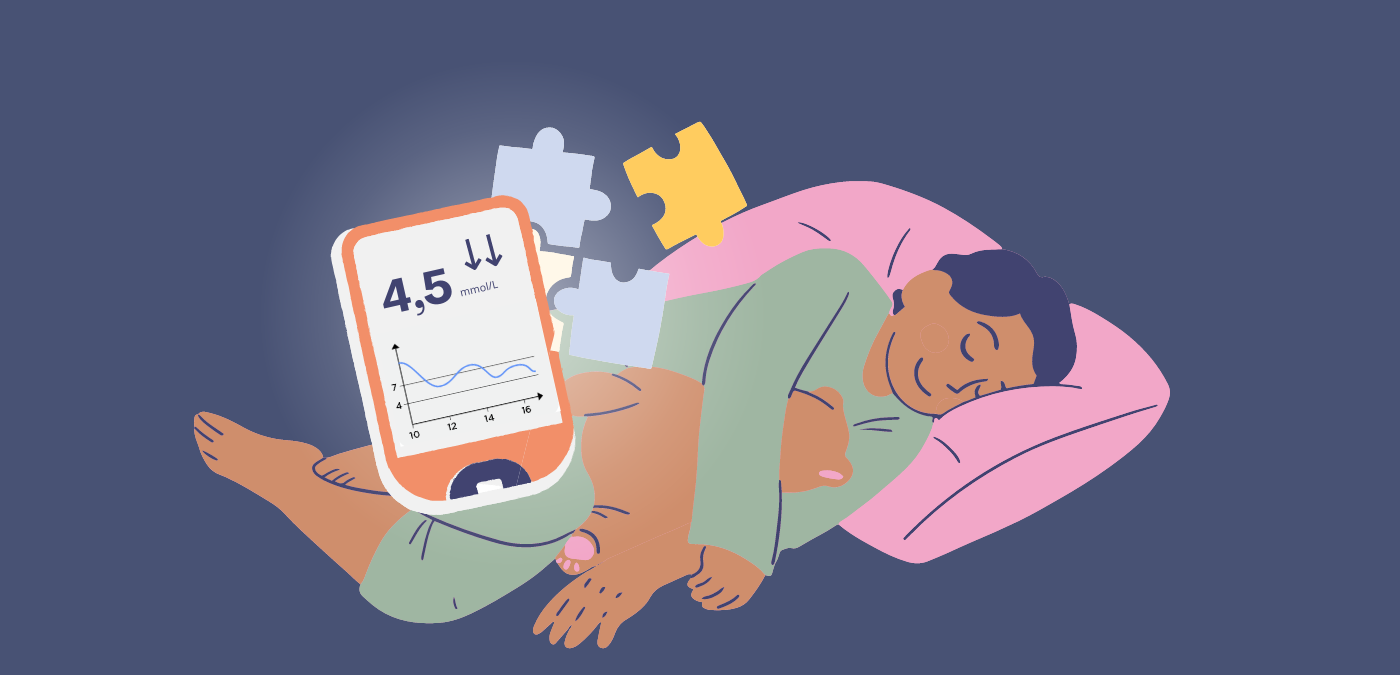
Low blood sugar (hypoglycemia) can happen at any time of day, but it is specifically risky during sleep. Nocturnal hypoglycemia can be dangerous as up to 80% of the episodes can be asymptomatic (without symptoms). When you are sleeping, your body’s ability to pick up on hypoglycemia symptoms is lessened, so nocturnal hypoglycemia might last longer than during the day. Because you are less likely to feel the symptoms, you may not wake up and treat your low as quickly as when you are awake.
In addition, sleep is usually the longest time you go without eating or monitoring blood sugar levels. This may explain why more than 50% of severe hypoglycemic episodes (episodes low enough that you are unable to treat them yourself) are nocturnal.
Whether severe or not, a nocturnal hypoglycemic episode disrupts sleep quality, productivity during the day, and can be associated with persistent fatigue. It can also increase the risk of some cardiovascular problems. For example, the risk of bradycardia (abnormally slow heartbeat) is eightfold higher during nocturnal hypoglycemia compared to daytime hypoglycemia.
How common is nocturnal hypoglycemia?
A study by Canadian researchers used continuous glucose monitoring (CGM) data from 100 adults living with type 1 diabetes (T1D) and found that nearly one-third of them experienced nocturnal hypoglycemia (at least 15 mins under 3.9 mmol/L) over a three-day period. The majority of participants did not detect these low blood sugar episodes. Children might be at higher risk of nocturnal hypoglycemia. A Canadian pilot study found up to 68% of 25 youth participants spent at least 15 mins below 3.9 mmol/L during the night, over three days.
In the BETTER registry, two-thirds of participants reported having at least one symptomatic nocturnal hypoglycemic episode that woked them up in a month. This is significant and can hide an even higher occurrence of asymptomatic nocturnal hypoglycemia since 4 in 5 episodes without alarmed continuous glucose monitoring go unnoticed.
How do you know if you’ve had a nocturnal hypoglycemic episode?
Monitoring blood sugar levels overnight is the best way to detect nocturnal hypoglycemia. Traditional methods such as waking up to measure blood sugar using a glucometer that requires a finger prick (capillary testing) can be cumbersome, but newer CGM technologies, especially those with alarms, can help detect these episodes as they occur. CGMs also record data for you to look at and make informed adjustments.
Other ways to tell if you’ve experienced nocturnal hypoglycemia are:
- Having vivid nightmares.
- Waking up with damp clothes/sheets, night sweats, that are not explained by other causes (e.g., room temperature or heavy covers).
- Waking up with a headache or feeling unusually tired (as nocturnal hypoglycemia impacts sleep quality).
- Waking up with higher than usual blood sugar levels.
What are some strategies to avoid nocturnal hypoglycemia?
Participants in the BETTER registry reported various strategies to prevent nocturnal hypoglycemia. Here are some you can try:
- Snacking before bed: Consider consuming a bedtime snack with carbohydrates (foods containing or that convert to sugars in our body) and protein, especially if bedtime glucose levels are low, you had a significantly active day, consumed alcohol, or were unusually physically active in the evening. More studies are needed to assess when this strategy is useful and what could be an ideal snack. One study showed that taking insulin to cover carbohydrates consumed at bedtime increases the risk of nocturnal hypoglycemia.
- Making insulin adjustments: you could adjust insulin doses depending on your evening activities (e.g., exercise) or consider a different type of insulin that was shown to reduce the risk of nocturnal hypoglycemia (e.g., long-acting insulin analogs). You can also try adjusting your basal rates if you use an insulin pump or, if not using a pump, reduce your evening basal dose (most of the time this approach does not apply when taking very long-acting insulins such as Tresiba).
- Using technology: CGM technology equipped with alarms can alert you when there is an imminent nocturnal hypoglycemia episode. Setting the appropriate alarm level to detect dangerous episodes without disturbing sleep too much is important and varies from person to person. Note that some provinces cover CGMs for individuals with T1D who meet specific criteria. Automated insulin delivery systems (artificial pancreases) can reduce the frequency of nocturnal hypoglycemia by automatically adjusting or suspending insulin administration in response to glucose fluctuations (when used in auto-mode).
It is important to note that some of these strategies are based on the experiences of people with T1D and evidence supporting these recommendations remains limited, thus more research is needed to find the best approaches depending on the individual.
Nocturnal hypoglycemia strategies seem to differ according to treatments and fear of hypoglycemia
A recent analysis using data from the BETTER registry found that the types of treatment used (injections, pumps, CGM’s) can influence which nocturnal hypoglycemia prevention strategy one chooses. For example, pump users report eating a bedtime snack less often than injection users. But they adjust their insulin more often, especially since they have the option of lowering basal rates overnight.
Additionally, people who report higher fear of hypoglycemia are more likely to use a nocturnal hypoglycemia strategy and also tend to use more strategies than those who have a lower fear of hypoglycemia.
Thanks to the BETTER registry, our team was able to explore real-life strategies to prevent nocturnal hypoglycemia, but there is still so much to learn. With your continuous support and engagement in the BETTER registry, we can further explore what are the most effective strategies to prevent nocturnal hypoglycemia and for whom they would work best. Don’t wait to register yourself or your child!
References :
Talbo, M.K., et al. (2022). Are nocturnal hypoglycemia prevention strategies influenced by diabetes technology usage? A BETTER registry analysis. Diabetes Research and Clinical Practice 191: 110080. https://www.sciencedirect.com/science/article/abs/pii/S0168822722008944?via%3Dihub
Talbo, M.K., et al. (2023). Gender differences in reported frequency and consequences of hypoglycemia among adults living with type 1 diabetes: Results from the BETTER registry. Diabetes Research and Clinical Practice 202: 110822. https://www.diabetesresearchclinicalpractice.com/article/S0168-8227(23)00585-5/fulltext
Desjardins, K., et al. (2014). Association between post-dinner dietary intakes and nocturnal hypoglycemic risk in adult patients with type 1 diabetes. Diabetes Research and Clinical Practice 106(3): 420-427. DOI: https://doi.org/10.1016/j.diabres.2014.09.015
Amiel, S.A. (2021). The consequences of hypoglycaemia. Diabetologia 64(5): 963-970. DOI: 10.1007/s00125-020-05366-3.
Ahmet, A. et al. (2011). Prevalence of Nocturnal Hypoglycemia in Pediatric Type 1 Diabetes: A Pilot Study Using Continuous Glucose Monitoring. The Journal of Pediatrics 159(2): 297-302. https://doi.org/10.1016/j.jpeds.2011.01.064

Written by: Meryem K. Talbo, P.Dt., M.Sc., nutrition Ph.D student, McGill University
Reviewed by:
- Nathalie Kinnard, scientific writer and research assistant
- Sarah Haag, R.N., B.Sc.
- Rémi Rabasa-Lhoret, M.D., Ph.D.
- Anne-Sophie Brazeau, P.Dt., Ph.D.
- Devin Cleary Gooden, Pamela Dawe, Barbara Kelly, Darrin Davis, patient partners of the BETTER project

Sign up for our newsletter
Subscribe to stay informed about type 1 diabetes.
Upcoming Event
Participate in the BETTER registry!
First registry of people living with T1D in Canada.
Learn More