



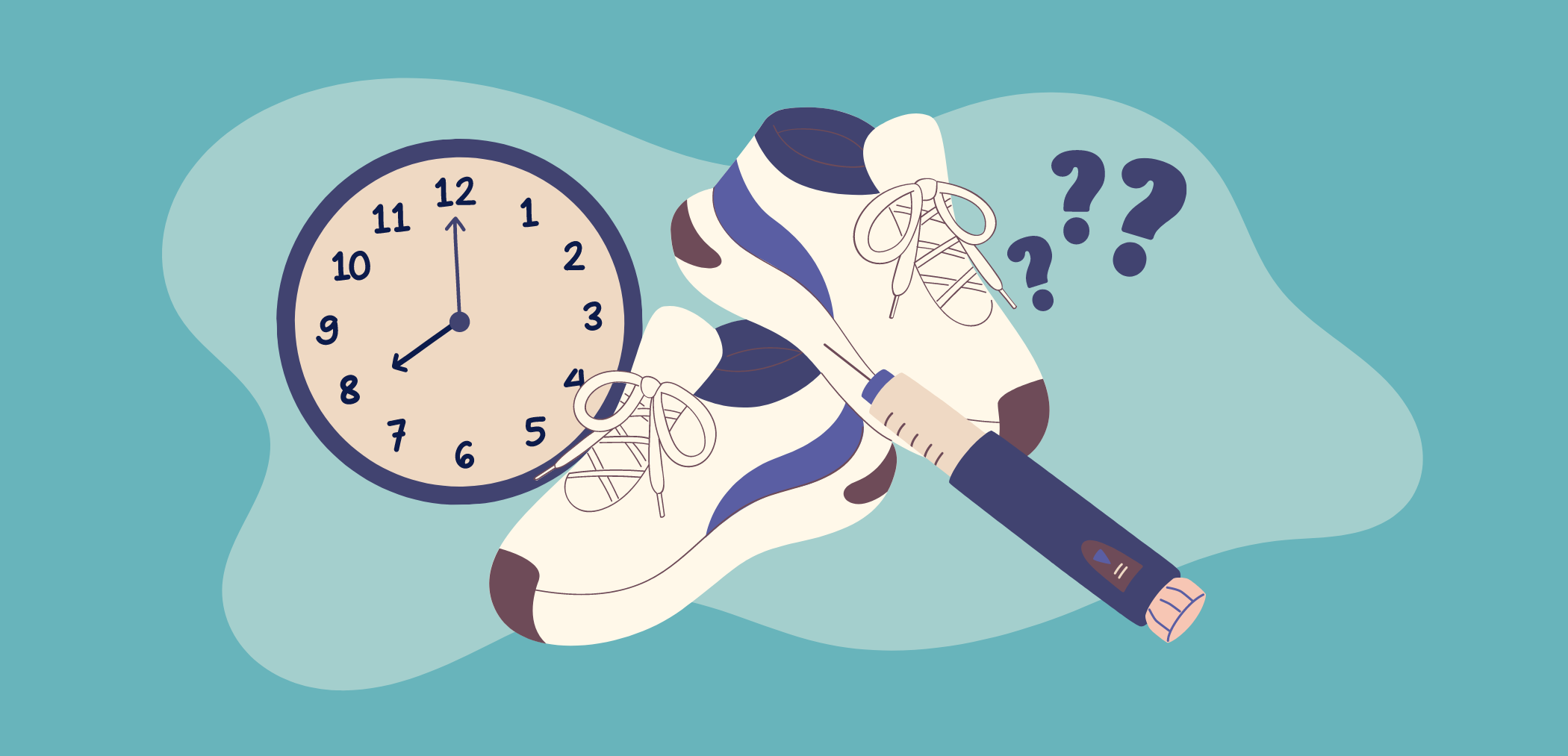
According to data from the BETTER registry, 47% of participants living with type 1 diabetes (T1D) report that fear of hypoglycemia (low blood sugar) is an obstacle to physical activity, despite the many health benefits (e.g., reduced risk of chronic disease, better heart and bone health, reduced stress). Many types of exercise, mostly aerobic or cardiovascular, do indeed lower blood sugar levels and increase the risk of hypoglycemia; these include running, walking, swimming and cycling.
However, strategies can be put in place to limit this risk while doing cardiovascular activities. One of the current recommendations is to reduce the injection of rapid-acting insulin by 50% for the meal preceding physical activity, as long as the activity lasts at least 30 minutes and takes place 90 minutes after eating.
A team of Canadian researchers and international collaborators have recently tested this strategy in other settings with 40 adults aged between 18 and 67, living with T1D and treated with insulin injections. What were they looking to find? The goal was to validate whether this recommendation—reducing the dose of rapid-acting insulin—also applies to FIASP ultra-rapid insulin, which starts acting 4 to 7 minutes after injection (as compared to 15 minutes for rapid-acting insulin) when physical activity takes place one to two hours after a meal.
Why does blood sugar drop when you move?
Ultra rapid and rapid-acting insulin taken at mealtime has a four to five-hour duration of action, regardless of if you move or not. If you walk or run during this window, your blood circulation will speed up, making your body more insulin-sensitive to supply your muscles with the energy they need using blood glucose.
In people without diabetes, insulin secretion naturally decreases with physical activity; this doesn’t happen for people with T1D. These factors, as well as many others, increase the risk of hypoglycemia during and after physical activity for people with T1D.
Elapsed time between physical activity and the previous meal: limited impact on the risk of hypoglycemia
Participants in the study observed that regardless of the type of insulin injected, the one to two-hour delay after a meal did not influence the time in range, nor the number of hypoglycemic episodes during physical activity. Blood sugar levels dropped significantly in both scenarios, but out of the 160 moderate-intensity stationary bike sessions, only 12 required carbohydrates to treat hypoglycemia.
Ultra-rapid vs. rapid-acting insulin: A comparable risk of hypoglycemia
The research team compared the effects of ultra-rapid and rapid-acting insulin on the risk of hypoglycemia in a similar scenario, involving reduced insulin dosage before the previous meal and a stationary bike session. With both types of insulin, the blood sugar increase between mealtime and the start of exercise (regardless of the delay), the number of hypoglycemic episodes during exercise, and the time spent in range were comparable. In both cases, blood sugar levels fell significantly during exercise. However, the decrease was slightly less steep for participants who had used ultra-rapid insulin (4.1 mmol/L, as compared to 4.4 mmol/L for rapid-acting insulin).
Make the most of physical activity, use the right strategy!
The study found that when aerobic exercise is initiated within hours after a meal, the current recommendations with regard to the timing (one to two-hour delay) or the type of insulin used (ultra-rapid vs. rapid-acting) don’t seem to require any adjustment. In most cases, reducing the insulin dose by 50% for the previous meal should be sufficient to limit the risk of hypoglycemia DURING exercise. By the same token, engaging in physical activity one hour after a meal—rather than two hours—can help minimize post-meal blood sugar fluctuations.
If you use an insulin pump, you can lower the basal rate by 50–80%, use the Activity mode (e.g., with the t:slim X2 pump) or set a temporary target range (e.g., with the MiniMed 780G pump) up to 90 minutes before starting physical activity.
There are different strategies to minimize the risk of hypoglycemia during and after physical activity. With these strategies, you’ll be able to enjoy the many benefits of physical activity while minimizing the risk of hypoglycemia during and after exercise!
References:
- Molveau, J. et al. (2024). Assessing the influence of insulin type (ultra-rapid vs. rapid insulin) and exercise timing on post-prandial exercise-induced hypoglycemia risk in individuals with type 1 diabetes: A randomized controlled trial. Diabetologia. doi: 10.1007/s00125-024-06234-0.
- Brazeau, A-S. et al. (2008). Barriers to physical activity among patients with type 1 diabetes. Diabetes Care 11: 2108-9. doi: 10.2337/dc08–0720
- Plotnikoff, R. C. et al. (2006). Factors associated with physical activity in Canadian adults with diabetes. Med. Sci. Sports Exerc. 38(8): 1526-34. doi: 10.1249/01.mss.0000228937.86539.95

Written by: Joséphine Molveau, M.Sc. in exercise science, Ph.D. candidate in nutrition (Université de Montréal) and in exercise science (Université de Lille, France).
Reviewed by:
- Nathalie Kinnard, scientific writer and research assistant
- Anne-Sophie Brazeau, P.Dt., Ph.D.
- Sarah Haag, R.N., B.Sc.
- Amélie Roy-Fleming, R.D., CDE, M.Sc.
- Corinne Suppère, kinesiologist, M.Sc.
- Marie-Christine Payette, Alec Courchesne, Jacques Pelletier et Michel Dostie, patient partners of the BETTER project.

Sign up for our newsletter
Subscribe to stay informed about type 1 diabetes.
Upcoming Event
Participate in the BETTER registry!

First registry of people living with T1D in Canada.
Learn More