



In order to self-manage diabetes, prevent complications and improve your quality of life, having a good understanding of the illness is a must.
A recent study conducted with the Support online training platform, developed by a multidisciplinary team of healthcare professionals and patient partners in the BETTER project, further supports the theory that education can improve the lives of people with T1D.
Adults who tested the Support platform experienced fewer hypoglycemic episodes, and many reported that they no longer had an intense fear of hypoglycemia, or feared it less. Their confidence in the management of their condition had also increased. After 6 months using the platform, participants gave it an overall rating of 8 out of 10.
A tool to help reduce hypoglycemia
Although the cause and effect relationship remains to be determined, users of the Support platform reported a reduced frequency of hypoglycemia (blood sugar below 4.0 mmol/L) over 3 days, going from 2.5 episodes to 2 episodes after using the platform for 6 months. Over the following 6 months, the number of hypoglycemic episodes per periods of 3 days further decreased, going from 2 to 1.5 episodes. In comparison, a subgroup of 244 participants in the BETTER registry who didn’t have access to the platform reported no change in the number of hypoglycemic episodes they experienced within the same timeframe.
The percentage of users with a high fear of hypoglycemia also decreased, going from 82% before using the platform to 53% after 6 months and 48% after using Support for 12 months. The subgroup of BETTER registry participants (who don’t have access to the platform) reported no change in their high fear of hypoglycemia over the same period.
Finally, after 6 months, close to half of the users reported that they had developed greater confidence in managing their blood sugar levels and preventing hypoglycemia.
Between 2020 and 2022, all adults enrolled in the BETTER registry who had been living with T1D for at least 1 year, were using multiple injections or an insulin pump and consented to be contacted to participate in research projects were invited to take part in the Support study. Some 207 people answered the call, 65% of them women. The average age of the participants was 49, and they had been living with T1D for an average of 25 years. They were given access to the platform for 12 months. They completed questionnaires at the start of the study, at the 6-month mark and after 1 year.
A modern, interactive, motivating and inclusive platform
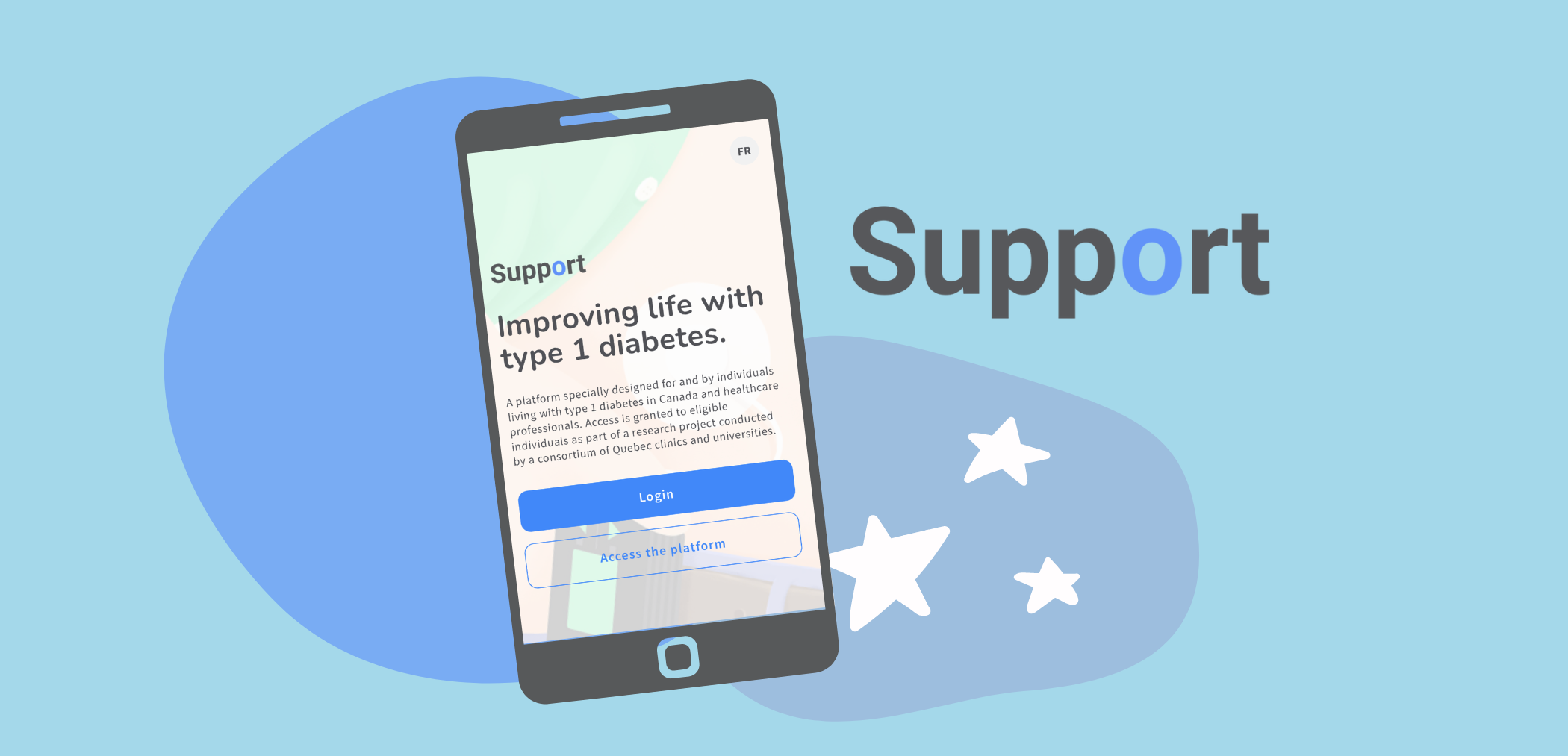
The Support platform was launched in 2020 in both French and English, and can be accessed on any device connected to the internet (computer, tablet, cell phone). Its initial goal was to demystify hypoglycemia, while leveraging the use of new technologies and treatments for the management of T1D.
The platform offers several short interactive courses on T1D divided into categories (e.g., diet, medication, blood sugar monitoring), each lasting between 5 and 20 minutes. The information is presented in various formats—text, images, videos, case studies, downloadable PDFs and calculators. The platform content is based on the latest clinical practice guidelines and other scientific publications, and is updated regularly.
The colourful, eye-pleasing platform also features weekly news blogs and a discussion forum focused on interactivity, social support and long-term motivation and engagement.
Every two weeks, users receive a newsletter giving an overview of the latest news blogs and two course suggestions on related subjects.
Diversity is at the forefront with the use of avatars with different profiles (e.g., age, gender, ethnic origin, diabetes treatment) in case studies. In addition, the choice of words is inspired by The Use of Language in Diabetes Care and Education to ensure that the message is neutral and non-judgmental.
The key role of patient partners
Patient partners were involved in every stage of the platform’s development (e.g., brainstorming, content creation, tool testing). In fact, hypoglycemia and the use of new medical technologies (e.g. insulin pumps) were chosen as main topics based on their suggestions. They also suggested other topics of interest, and shared the obstacles they encountered when using different digital tools.
That’s a very unique, invaluable feature of Support: a platform developed by and for people living with T1D!
What’s next?
The latest version of the platform offers a customized browsing experience based on whether the user is a person living with T1D aged 24 and under or 25 and over or a healthcare professional. For instance, courses on the transition to adult medical care have been added for teenagers. Healthcare professionals also have access to their version of the platform, Support-Pro, validated by 144 participants in 2021-2022. The latter were highly satisfied with their use of Support-Pro, testifying to having developed greater confidence and knowledge in the management of T1D.
Validation of the platform is ongoing. Support is available to adults with T1D living in Canada and to healthcare professionals as part of studies aimed at its integration into healthcare centers. It’s also being tested in some pediatric clinics in Quebec with teenagers getting ready for their transition to adult care. Ultimately, the goal is to make this tool available to the entire Canadian T1D community in the near future.
To access the platform: www.type1support.ca
References:
- Xie L. F., Roy-Fleming A., Haag S., Costa D. D., and Brazeau A.-S. (2023). Development of the Support self-guided, web application for adults living with type 1 diabetes in Canada by a multi-disciplinary team using a people-oriented approach based on the Behaviour Change Wheel. Digital Health 9. doi:10.1177/20552076231152760
- Xie L. F., Housni A., Roy-Fleming A., et al. (2023). Evaluation of Support, a self-guided online type 1 diabetes self-management education and support web application—a mixed methods study. DIGITAL HEALTH 9. doi:10.1177/20552076231204435
- Katz, A. et al. (2024). The Support-Pro Online Training Platform: Increasing Health Care Professionals’ Confidence and Knowledge in Treating People Living With Type 1 Diabetes. Diabetes Care 47 (8): e54–e56. https://doi.org/10.2337/dc24-0302

Written by: Ana Teresa de Luna Pallone
Reviewed by:
- Nathalie Kinnard, scientific writer and research assistant
- Anne-Sophie Brazeau, P.Dt., Ph.D.
- Amélie Roy-Fleming, R.D., ÉAD, M.Sc.
- Sarah Haag, R.N., B.Sc.
- Jacques Pelletier, Sonia Fontaine, Michel Dostie, Claude Laforest, Marie-Christine Payette, Amélie Eloundou, patient partners of the BETTER project.

Sign up for our newsletter
Subscribe to stay informed about type 1 diabetes.
Upcoming Event
Participate in the BETTER registry!
First registry of people living with T1D in Canada.
Learn More