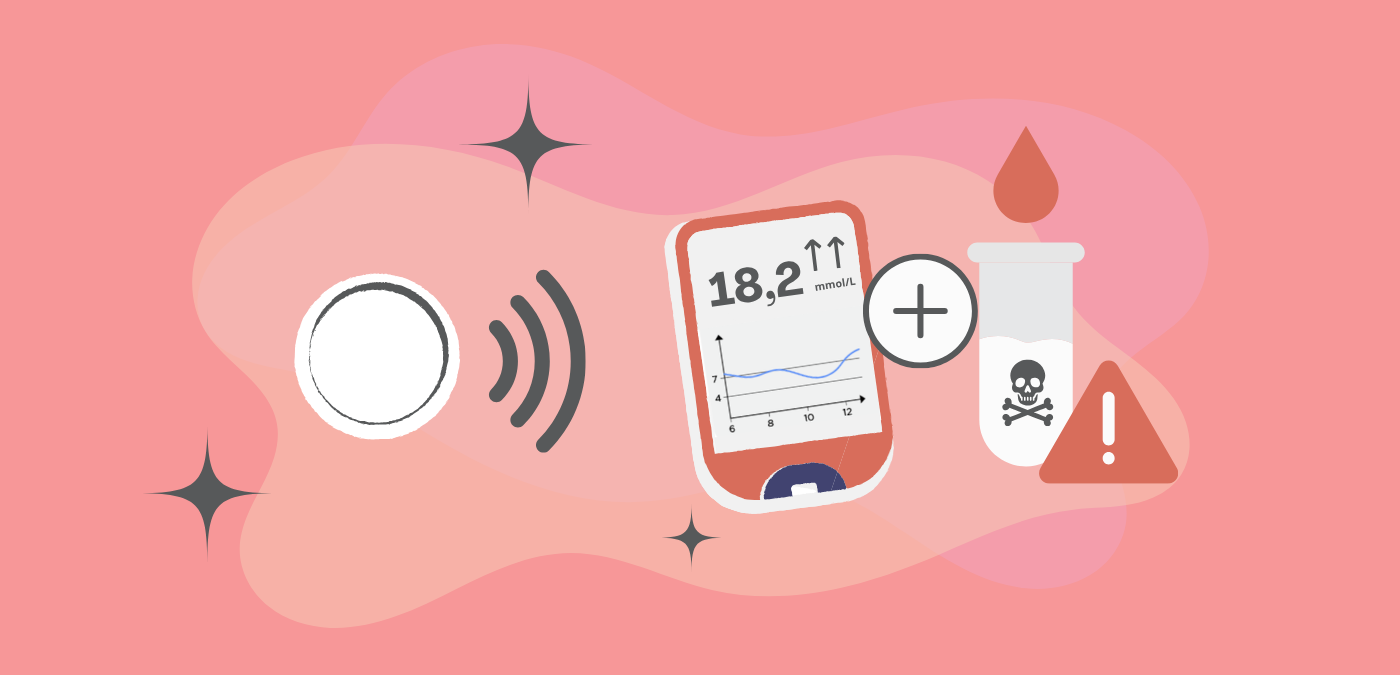
Sensors continuously monitoring ketones: what’s coming for T1D

T1D insights you can use:

1

Diabetic ketoacidosis is an emergency and a scary complication of type 1 diabetes

2

Multiple continuous glucose monitoring companies plan to release a combined continuous glucose and ketone monitor

3

Experts in diabetes and ketoacidosis came together to write recommendations for the manufacturers, healthcare professionals, and people living with diabetes for continuous ketone monitoring

4

Many people might benefit from awareness of ketone levels, especially when given the appropriate steps to take to address them

You’re likely familiar with continuous glucose monitors (CGM) and how they have allowed us to better understand changes in blood sugar. Soon, new technology could change the game again, sensors to measure blood sugar AND ketones in real time. 

Diabetic ketoacidosis: an emergency to avoid

Diabetic ketoacidosis is one of the most serious and potentially life-threatening complications of T1D. It happens when there isn’t enough insulin to move sugar into the cells. To provide a fuel source, the body breaks down fat which produces ketones. While low levels of ketones can be safe, an excess of ketones raises blood acidity and results in an emergency called diabetic ketoacidosis.

The problem? Outside of illness or persistently high blood sugar, most people rarely test their ketones. Ketones can be tested with finger pricks and the appropriate reader or the less precise urine strips. One study showed that only 5% of people tested ketones when blood sugar was > 14 mmol/L and there is a lack of awareness on what to do if you were to test them. 

What’s coming: a glucose + ketone sensor

CGM companies are working to develop a combined glucose and ketone sensor. Abbott (Freestyle) is in advanced development for their ketone and glucose sensor. Approaching the launch in some countries, the International Society for Pediatric and Adolescent Diabetes recently released a statement on important steps for the manufacturers, healthcare providers, and people living with diabetes to consider with continuous ketone monitoring.

The recommendations emphasized the importance of education on ketone levels and how to manage them for device users and all healthcare providers who care for them. They also recommend trend arrows (like with CGM), minimal alerts to avoid alarm fatigue, and availability of user data to study ketones in people living with T1D on a larger scale.

Understanding ketone levels

In addition to the level of high blood glucose and the context, ketone levels are an important safety indicator. The experts propose 4 zones and what to do in each one; in all cases, it is recommended to follow the guidance of your healthcare professionals.

Normal

less than 0.6 mmol/L

All good. No action needed.

Elevated

0.6 to 1.5 mmol/L

You may feel tired, nauseous, have stomach pain, or experience vomiting.

Monitor your blood sugar more frequently. Check that your pump is working properly, that there are no catheter issues, or that you haven't missed an injection. Increasing insulin and hydration is probably needed.

High

1.5 to 3 mmol/L

Elevated ketones symptoms + sweet-smelling breath, confusion, and difficulty breathing.

Contact your healthcare team. Use a guaranteed insulin injection method (e.g. syringe even if you have a pump) and ensure proper hydration.

Urgent high

above 3 mmol/L

All symptoms above + deep, rapid breathing, dry lips, extreme thirst, and the need to urinate frequently.

Seek emergency care immediately. Insulin injection and hydration is mandatory.

For tips on when to test your ketone levels and what to do with the results now, you can find current guides whether you use insulin injections or an insulin pump on the Support platform

Why continuous ketone monitoring is useful today

The limited data that we have on ketones indicate that some people may be much more susceptible to ketoacidosis than others. Also, there are situations where ketones can be high without serious hyperglycemia, called euglycemic ketoacidosis, which can go unnoticed. In these and other cases, continuous ketone monitoring may be particularly useful:

  • Recurrent diabetic ketoacidosis: Some people have frequent diabetic ketoacidosis. Continuous ketone monitoring could alert them before it becomes urgent and help to uncover why the ketoacidosis is happening.
  • Adjuvant medication use: Certain adjuvant medications (SGLT2 inhibitors (e.g. Jardiance, Forxiga)) can help manage blood sugar and may lower the risk of kidney and heart disease but come with an increased risk of euglycemic ketoacidosis. Having a constant monitor of blood ketone levels may make this class of medications safer and more accessible for people living with T1D.
  • Insulin pump/artificial pancreas use: In the BETTER registry, more than 40% of Canadians living with T1D are using insulin pumps. In the case of an undetected pump malfunction, continuous ketone monitoring could catch the issue before it’s urgent.
  • Pregnancy or illness: Both pregnancy and sickness can increase ketones without hyperglycemia. Continuous ketone monitoring could provide an important safety net.
  • Isolated populations: People without easy access to a hospital at high risk of diabetic ketoacidosis may find assurance in early detection of high ketones.
  • Ketogenic diet: Extremely low-carb diets, particularly the ketogenic diet, can raise ketones to “elevated levels”. For those wanting to try a ketogenic diet, the use of continuous ketone monitoring may alleviate concerns of ketoacidosis. 

What comes next?

There is still much to understand about ketones and continuous ketone monitoring for people living with T1D. Whether these upcoming devices should be used broadly or on a case by case basis remains to be seen. Adding new diabetes technology can be a difficult and frustrating process, but integrating continuous ketone monitoring with CGM will hopefully lower some barriers and increase safety. Still, there is also a risk of increasing the mental burden with data overload and additional alarms. It will thus be crucial to establish who will benefit, and when and how to get the benefits while minimizing the risk of additional burden.

Want to participate in T1D research?

Do you or your child live with T1D in Canada? You can contribute your lived experience to research by joining the first registry of people living with type 1 diabetes in Canada today!

Written by: Cassandra Locatelli, PhD

Reviewed by:

  • Sarah Haag, Clinical Nurse, B.Sc.
  • Remi Rabasa-Lhoret, MD, PhD
  • Anna Theroux, patient partner

Upcoming Event

Discover more from BETTER

Subscribe now to keep reading and get access to the full archive.

Continue reading