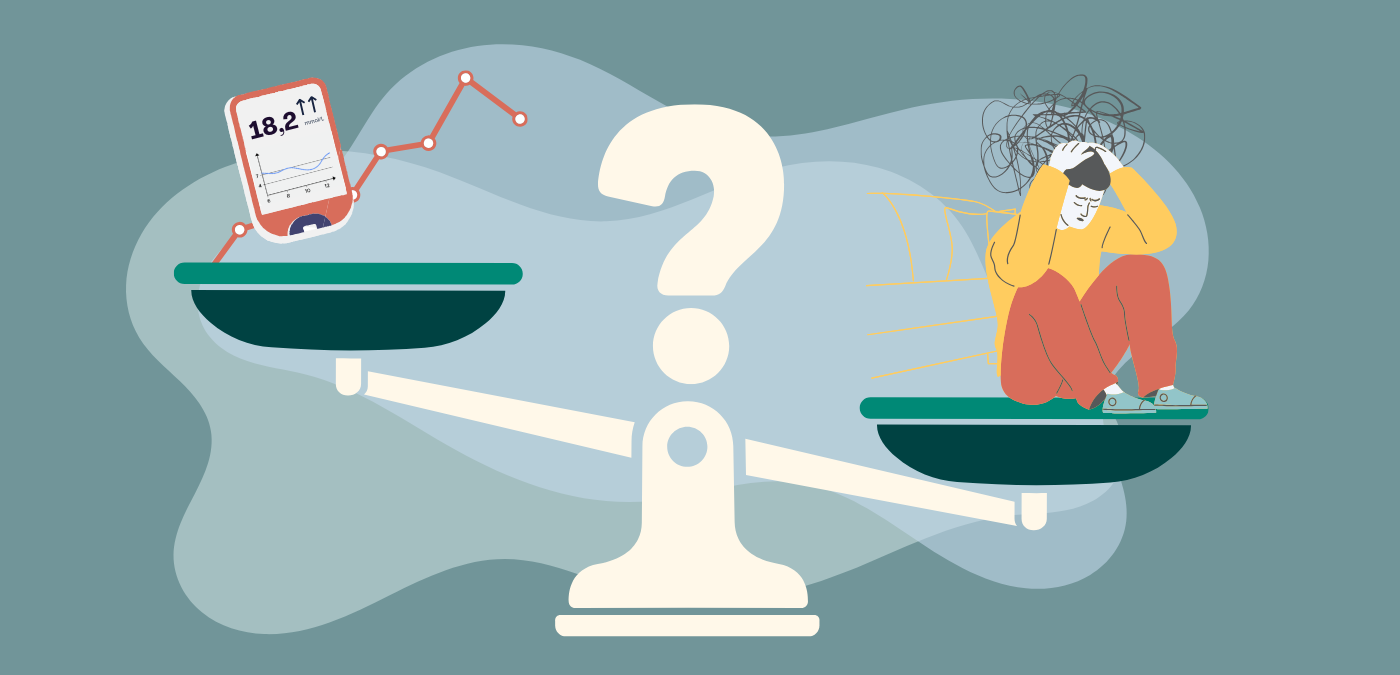
Type 1 diabetes (T1D) is a time consuming and burdensome disease. The consistent effort required to manage blood sugar can cause mental strain over time and acute stress during difficult to manage periods. Diabetes distress is a term used to describe the negative emotional effects specific to the challenges of managing diabetes. While it is logical that difficult to manage blood sugars could cause distress, stress itself can also have effects on blood sugar.
So what comes first, diabetes distress or dysregulated glycemia?
Long-term studies using HbA1c as the glucose measure aren’t able to pin down how these factors are dynamically and acutely impacting each other and the person living with T1D.
What is the study?
One study tracked real time continuous glucose monitor (CGM) data and compared it to participant’s regular responses to this question about diabetes distress, “How stressed do you feel about your diabetes or diabetes management right now?”. Participants were prompted to score their diabetes distress from 0-100 every 3 hours of waking time for 14 days and were given a blinded CGM. This blinded CGM meant that the participants could not see the values of this added device and continued their care as usual. Together, this data can provide a look into the dynamic interplay of diabetes-specific stress and continuous blood glucose data within individuals and over time.
Hyperglycemia precedes diabetes distress
When participants had lower time in range, higher time in hyperglycemia, and higher average glucose values, diabetes distress values were typically increased in the following 3 hours. Interestingly, time in low glucose did not predict upcoming diabetes distress.
Diabetes distress doesn’t precede hyperglycemia
When participants reported higher diabetes distress, there was no relationship to time in range, time in hyperglycemia, or average glucose values 3 hours later. High diabetes distress was only shown to be linked to less time in low glucose in the following 3 hours.
Having the data influences distress
People without access to CGM data (no personal CGM) tended to have less distress when they had higher time in range; however, this relationship was much stronger in people who had personal CGMs and thus, had access to that data. Similarly, people with personal CGMs had more diabetes distress when they had greater time in hyperglycemia but this link was not found in people without a personal CGM.
Unlike CGM alone, having access to an automated insulin delivery system (aka, closed loop or artificial pancreas) did not affect the relationship between blood glucose data and distress. This may mean that these automated insulin delivery systems lessen the potentially distressing effects of having the constant CGM data.
What does it all mean?
Both emotional distress and blood sugar are very complicated and influenced by many factors. However, this study points to dysregulated glucose levels occurring before the onset of diabetes distress and not so much the reverse. While the study can’t control for other complicating factors and can’t determine cause and effect, future studies can more closely examine these temporal relationships.
This study also highlights the complexity of having your blood sugar always available with CGM. While CGMs have empowered many people to actively manage their blood glucose, having this information can be additionally stressful. For example, trend arrows and alarms can give essential heads-up but, in some situations, may add unnecessary stress. Further innovation in T1D management, like continual improvements to automated insulin delivery, will hopefully empower individuals in their self-management without the added stress.
Want to get involved in research?
The BETTER registry cares about improving both the physical and mental wellbeing of people with T1D through research, resources, and raising awareness. If you would like to share your lived experience, and get access to management tools for the blood sugar challenges and emotional burden of T1D, consider joining the registry now!
Reference:
Gonzalez JS, Hoogendoorn CJ, Hernandez R, Schneider S, Mustafiz F, Siddhanta M, Pyatak EA. Diabetes-Related Distress and Glycemic Dysregulation in Everyday Life With Type 1 Diabetes: Which Comes First? Diabetes Care. 2025 Aug 1;48(8):1453-1460. doi: 10.2337/dc25-0559. PMID: 40554543; PMCID: PMC12279033.