Managing type 1 diabetes (T1D) is a never-ending task that requires consistent daily effort. New technologies aim to improve blood sugar outcomes and lessen the burdens of T1D, but can also increase awareness and prompt more frequent thoughts about your blood sugar.
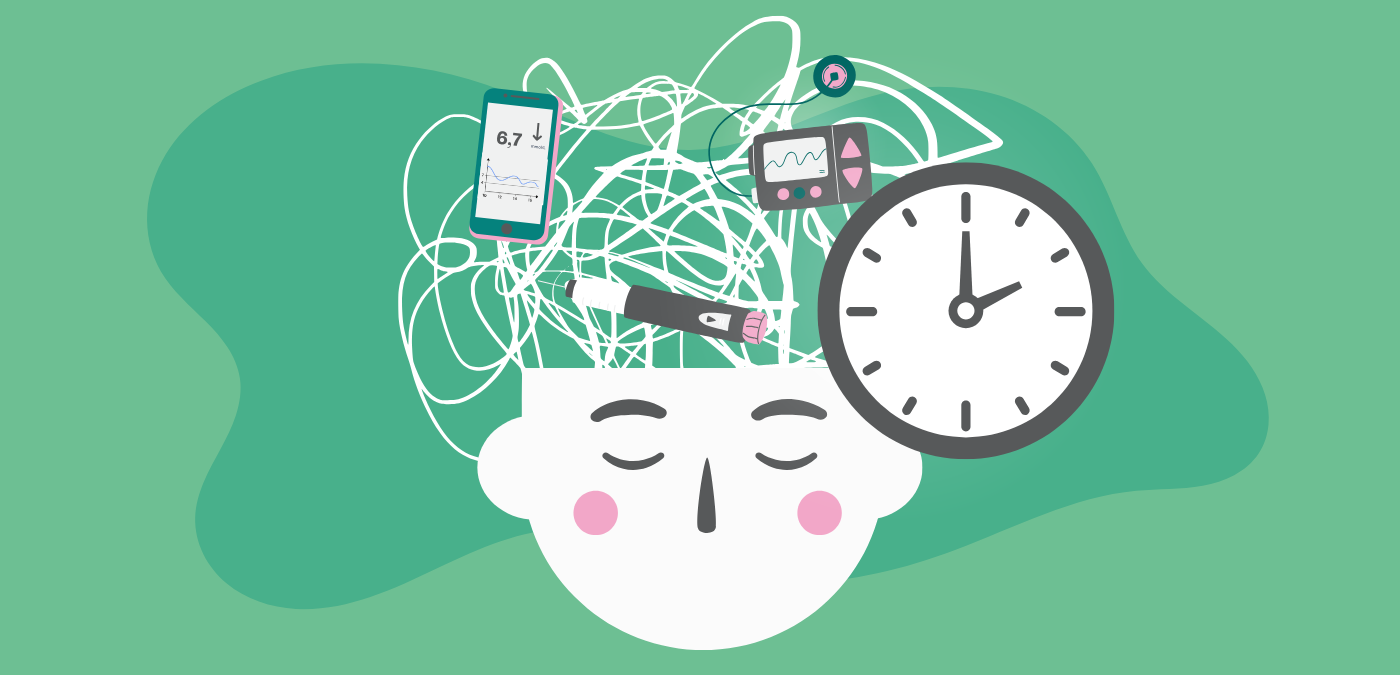
One study asked people living with diabetes a simple question: “How many minutes per day do you spend thinking about your diabetes?” The researchers used this data to see if there were any differences in the “mental load” of diabetes among participants based on type of diabetes (1 or 2), sex, mental health conditions, and use of diabetes technologies.
People with diabetes spend more than an hour a day thinking about it
This study included 503 German adults with diabetes, of whom 75% had T1D. They were asked to spontaneously estimate how many minutes per day they think about their diabetes; this is what the researchers called the perceived mental load. The perceived mental load was very different across participants; however, the study average was 77.1 minutes (1 hour and 17 minutes) per day.
Diabetes mental load was higher in women than men
On average, women reported much greater time thinking about their diabetes than men. Even after taking into account mental health and other factors, women spent an estimated 21 minutes more per day thinking about their diabetes. People with T1D also reported greater perceived mental load than the participants with type 2 diabetes (T2D).
Diabetes technology may increase perceived mental load
People who used continuous glucose monitors (CGM) reported higher mental load than non-users. In comparison to people with T2D who used no insulin, people with T1D or T2D who use insulin reported higher mental load on average. People using newer technology like insulin pumps (automated insulin delivery systems and continuous subcutaneous insulin injections) reported the greatest time spent thinking about diabetes (+27 minutes), whereas those taking multiple daily injections reported just 9 more minutes of mental load than insulin non-users.
Do mental health issues and mental load go hand in hand?
People with mental health issues also reported higher mental load (+7 minutes). Surprisingly, physical health issues, specifically chronic diabetes complications (e.g., retinopathy, cardiac disease, nephropathy), had no meaningful effect on time spent thinking about diabetes.
It’s important to note that time spent thinking about diabetes doesn’t necessarily mean diabetes distress. Diabetes technology has previously been shown to improve treatment satisfaction in many people with T1D. The additional time thinking about diabetes may be spent more on self-managing and less on concerns of hypoglycemia or psychological distress. This is likely to be very variable from person to person.
Mental load and T1D care
While this is one relatively small study, posing a single spontaneous question, it highlights the amount of time and mental space that people use in their day-to-day life to understand and manage their diabetes. A better understanding of how negative, positive, or neutral these thoughts are and how they impact the people having them is an important next step. When adjusting management goals or helping patients take on new technology, considerations for mental health and potential data overwhelm should be carefully addressed by healthcare providers to help support the overall wellbeing of those living with T1D.
If you have the mental space and want to participate in research, join the BETTER registry!
Reference:
- Priesterroth LS, Hermanns N, Kulzer B, Haak T, Ehrmann D. Counting the Minutes: Perceived Diabetes Mental Load and Its Associations With Technology Use and Mental Disorders. J Diabetes Sci Technol. 2025 May;19(3):830-835. doi: 10.1177/19322968231214271. Epub 2023 Nov 19. PMID: 37981751; PMCID: PMC12034985.