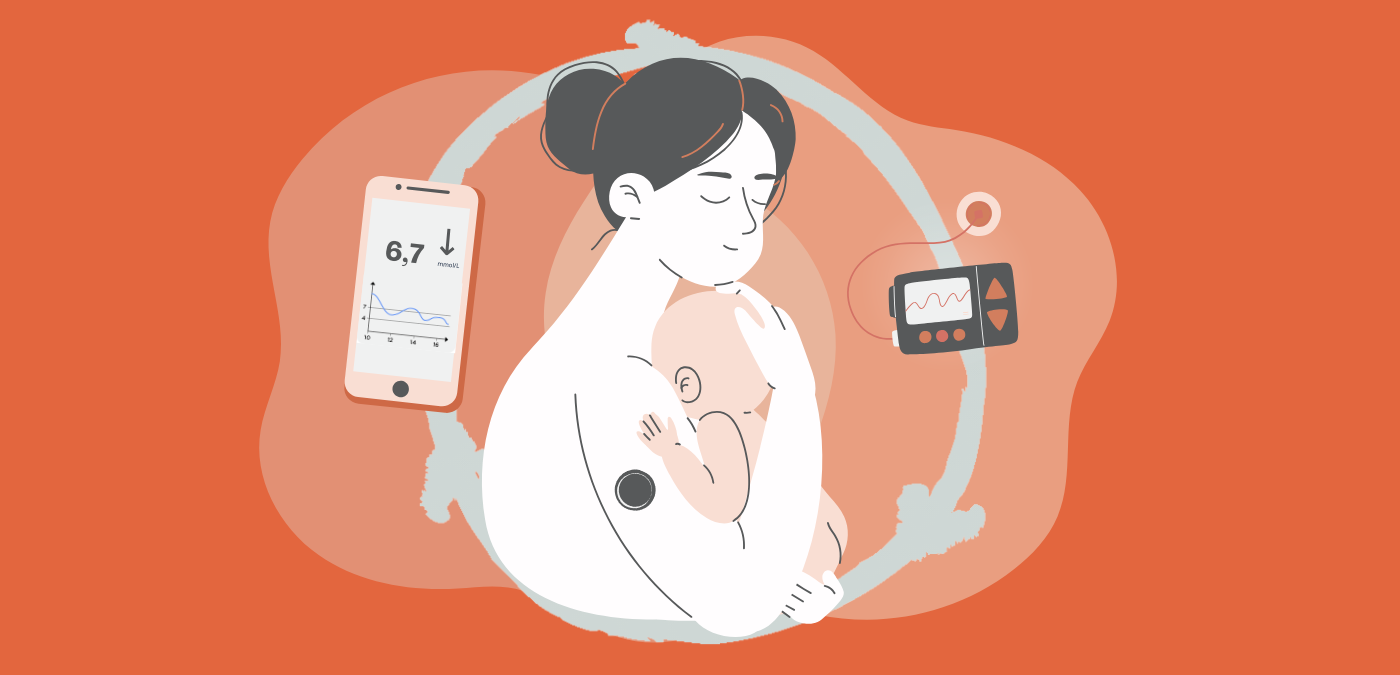
When you have type 1 diabetes (T1D) and you become a mother, you may face new challenges. After giving birth, insulin sensitivity (i.e., the body’s ability to use insulin) this sensitivity returns to normal or may even be temporarily increased, making insulin more effective at lowering blood sugar. It is therefore crucial to quickly adjust insulin doses downward to avoid hypoglycemia. This change, which varies greatly from person to person, combines with other factors such as hormonal fluctuations, fatigue, possible breastfeeding, lack of sleep, and new responsibilities with a newborn. All of these elements complicate the daily management of T1D.
A recent study from the United Kingdom, called AiDAPT, focused on an important question: could a hybrid closed loop system, or “artificial pancreas,” help improve blood sugar levels and management if used for six months post-partum?
What is a hybrid closed-loop system?
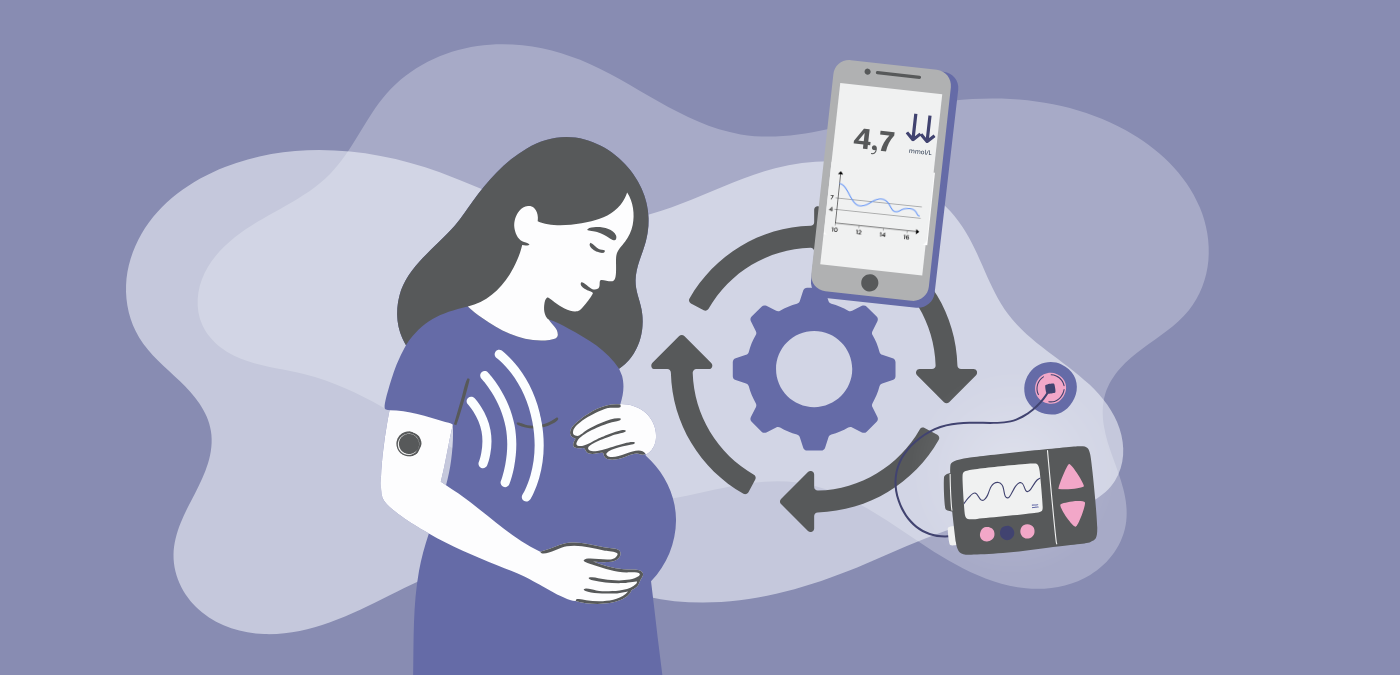
Hybrid closed-loop systems are made up of three components: an insulin pump, a continuous glucose monitoring (CGM) sensor and a smart algorithm. The sensor measures blood sugar levels at all times; the algorithm analyzes the data and automatically adjusts insulin administration through the pump. This allows the system to “respond” to glycemic fluctuations in real time, decreasing or increasing insulin without human intervention.
Until recently, these systems were mostly studied for their use during pregnancy. The AiDAPT study fills an important gap by providing data on their post-partum use.
More time spent in range
On average, for women who use a closed-loop system (CamAPS FX, Ypsomed) after giving birth, time spent in target range reached about 70% (between 3.9 mmol/L and 10.0 mmol/L). In comparison, women who used injections (pen or syringe) or “non-automated” pumps reached about 54% of time spent in target range, i.e., 15% less.
In practical terms, this means about three and a half hours more in target range, a significant advantage when dealing with fatigue and daily, unpredictable life with a baby.
Fewer nighttime hyperglycemic episodes, no increased risk of hypoglycemia
The first post-partum months mark significant hormonal changes (including cortisol and growth hormone levels) that can cause nighttime hyperglycemia. Women using closed-loop systems not only saw their time spent in range improve, but they also achieved more stable blood sugar levels with fewer hyperglycemic episodes (≥ 10,0 mmol/L), especially at night, as opposed to other study participants.
Certain post-partum elements, such as breastfeeding, can increase the risk of hypoglycemia. In this study, this risk remained very low, regardless of the treatment used.
A lasting positive impact
The study also shows that the positive impact on blood sugar levels is maintained over time. Whether three or six months post-partum, women who used a closed-loop system kept scoring better in terms of time spent in target range and hyperglycemia, as opposed to women who continued using injections or “non-automated” pumps.
In conclusion
If you’re looking for tools to help you manage diabetes after giving birth, this study shows that using a closed-loop system can help maintain blood sugar in range, reduce the risk of hyperglycemia and reduce the burden associated with making multiple insulin adjustments. This tool could give you some much-needed respite in an already very demanding period of time.
These results confirm that closed-loop systems are beneficial not only during pregnancy, but also after giving birth.